Bringing UX into the conversation
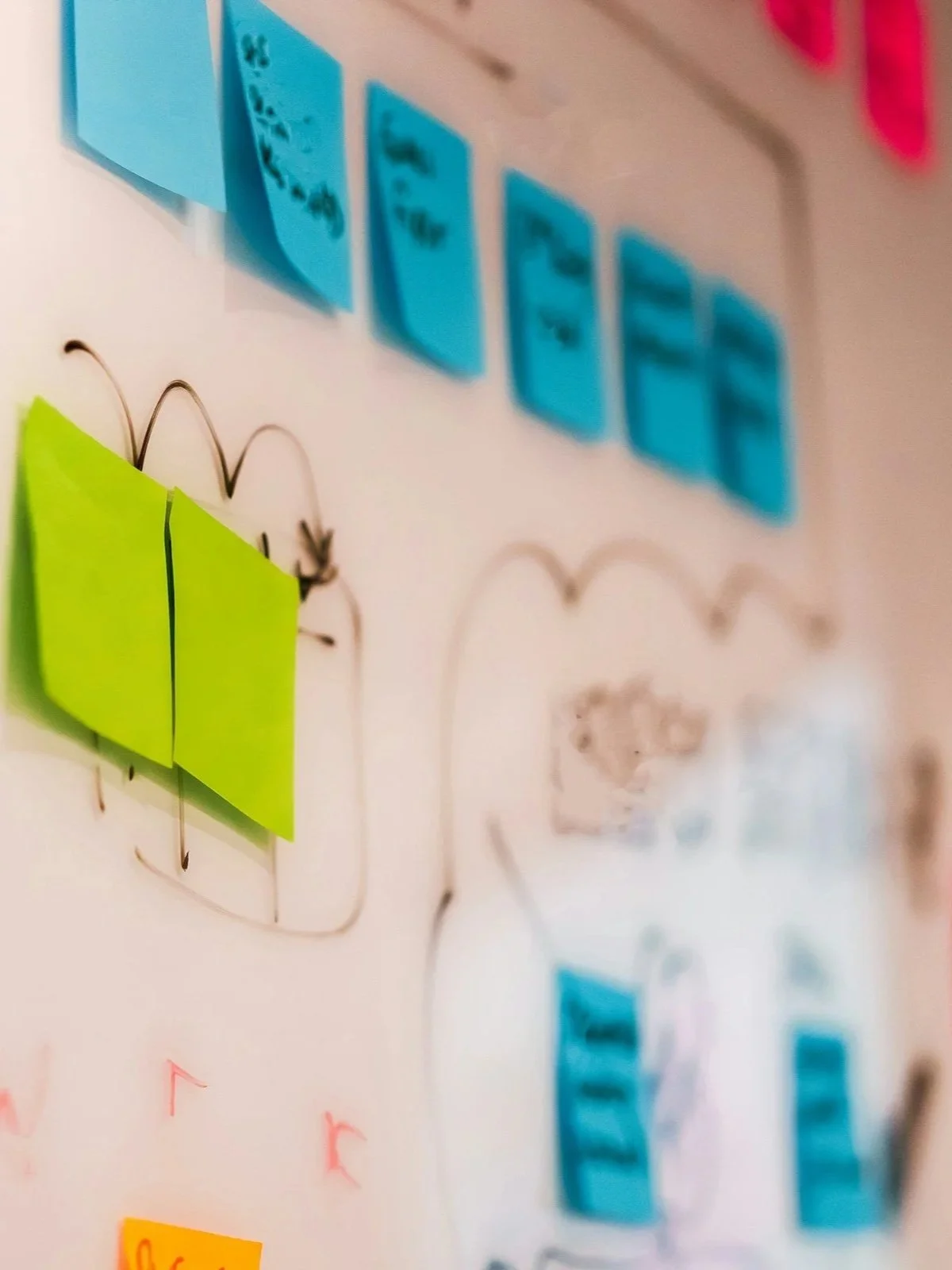
The workshops were open to anyone interested in understanding UX, what we do, how we work and where UX can contribute to their work.
As part of the workshop, I introduced three UX personas representing key roles within dental practices: dentists, practice managers and front-desk staff. Using these personas, colleagues explored different user needs, goals and pain points, and learned how to apply a user-centered perspective to their own work.
Company
MSPS Groep • Infomedics • CHA
Initiative
UX Awareness & Persona Workshops
Impact
Building UX awareness across the organization
Making UX methods and user-centered thinking more accessible to colleagues across different roles.
The context
UX was still unfamiliar to many colleagues across the organization. Not everyone knew what UX Designers do, when to involve us, or how understanding users could help them make better decisions in their own work.
Instead of explaining UX through theory alone, I wanted colleagues to experience one of its most important principles firsthand: we make more assumptions about users than we realize.
The approach
The workshop started with an introduction to UX Design, what our role involves and where UX can contribute throughout the development of a product or service.
I then introduced the concept of UX personas and how research can help us move from assumptions toward a more realistic understanding of the people we design for.
But rather than simply presenting the personas, I turned this into a hands-on exercise.
Experiencing assumptions
Participants worked in small teams with three personas representing important user groups within dental practices:
Dentist
1
Focused on patient care and treatment, with limited time for administrative tasks.
Handles much of the daily administration and patient communication, often working directly with operational systems.
2
Front-desk Staff
Oversees the day-to-day operations of the practice, balancing administrative, financial and organizational responsibilities.
3
Practice Manager
From assumptions to research
After the exercise, we revealed the actual personas.
These weren't fictional profiles. I had developed them based on interviews with people from the three user groups, capturing patterns in their needs, behaviours, goals and challenges.
Comparing their assumptions with the research-based personas created the key moment of the workshop: what we think we know about users isn't always what we actually know about them.
The exercise made the value of UX research tangible in a way a presentation alone couldn't.
Beyond the workshop
Bringing the personas to life
I didn't want the personas to disappear once the workshop ended.
To make them more visible and usable across the organization, we introduced supporting materials including persona documentation and office banners.
This gave colleagues a shared reference to the users behind our products and helped keep their perspectives visible beyond individual UX projects.
The outcome
The interactive format was received positively by participants and created lively discussions throughout the sessions.
More importantly, colleagues left with a greater awareness of how easily assumptions can influence decisions about users.
The workshop helped make UX more tangible: not simply as the team that designs interfaces, but as a discipline that can help the organization replace assumptions with understanding.
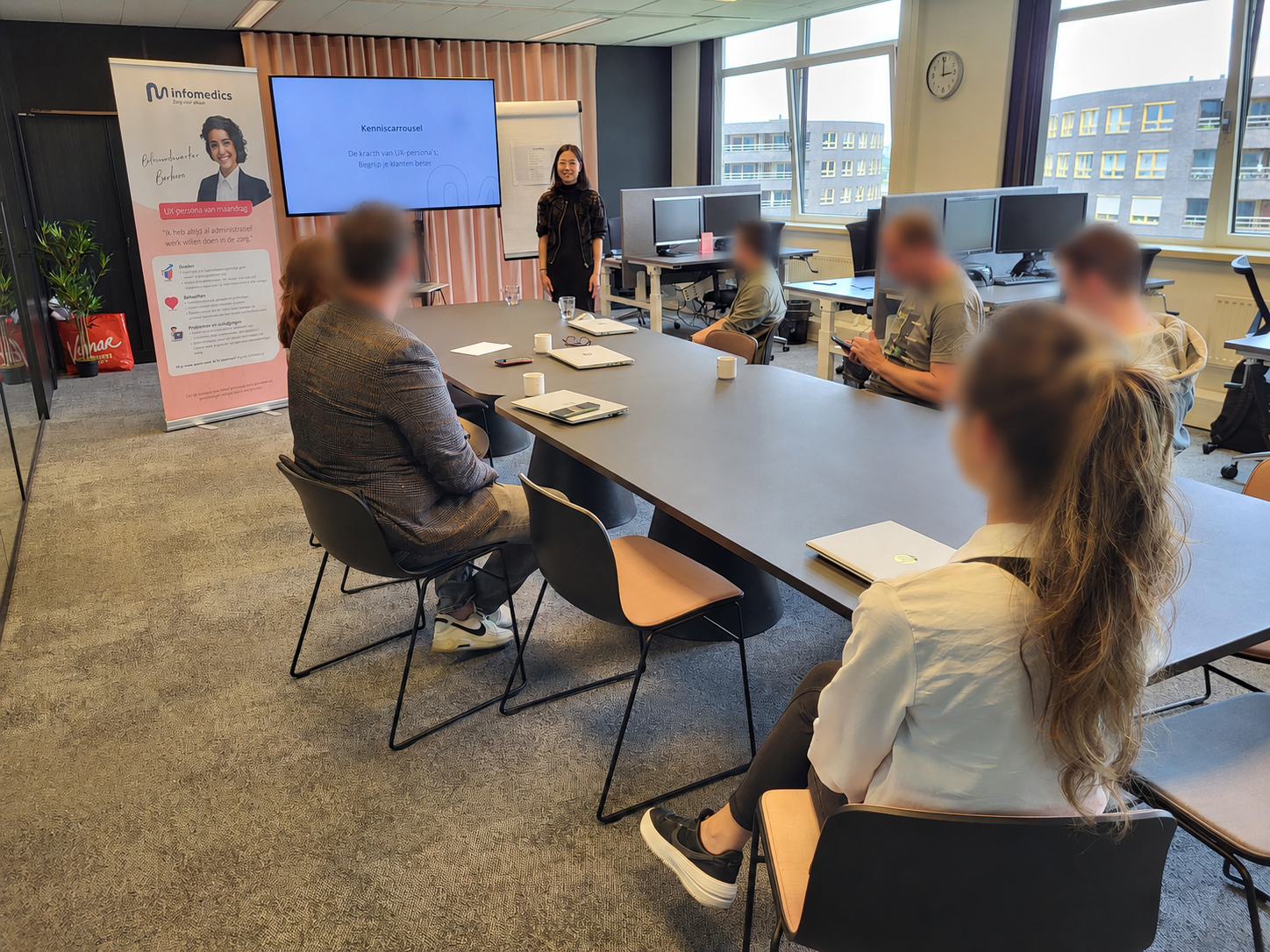
One of the UX Persona workshops at Infomedics, also facilitated for colleagues at CHA.What I learned
Explaining UX is useful. Letting people experience why UX matters is far more powerful.
By deliberately allowing participants to make assumptions and then confronting those assumptions with actual user research, an abstract UX principle became something they could experience for themselves.
It reinforced something I value in my work: creating a user-centered organization isn't only about doing good UX work. It's also about helping others see the value of understanding users.